In short
International groups coming to India should allow four to six months of lead time, plan around the October to March season, enter through a well-connected gateway such as Delhi, Mumbai, Bengaluru or Hyderabad, and contract a single in-country partner who can handle ground operations, local taxes and duty of care. Most business delegates travel on an e-Business visa; the e-Conference visa is a separate category tied to approved events, so confirm the correct route on the official Indian visa portal early.
Key takeaways
- Start visa guidance early — it is the most common cause of a delegate missing day one
- October to March is the comfortable season across most of the country; the hills invert it
- One in-country partner for ground, compliance and payments is worth more than three cheaper specialists
- Build a duty-of-care plan that names hospitals, not just a hotline
Why groups choose India
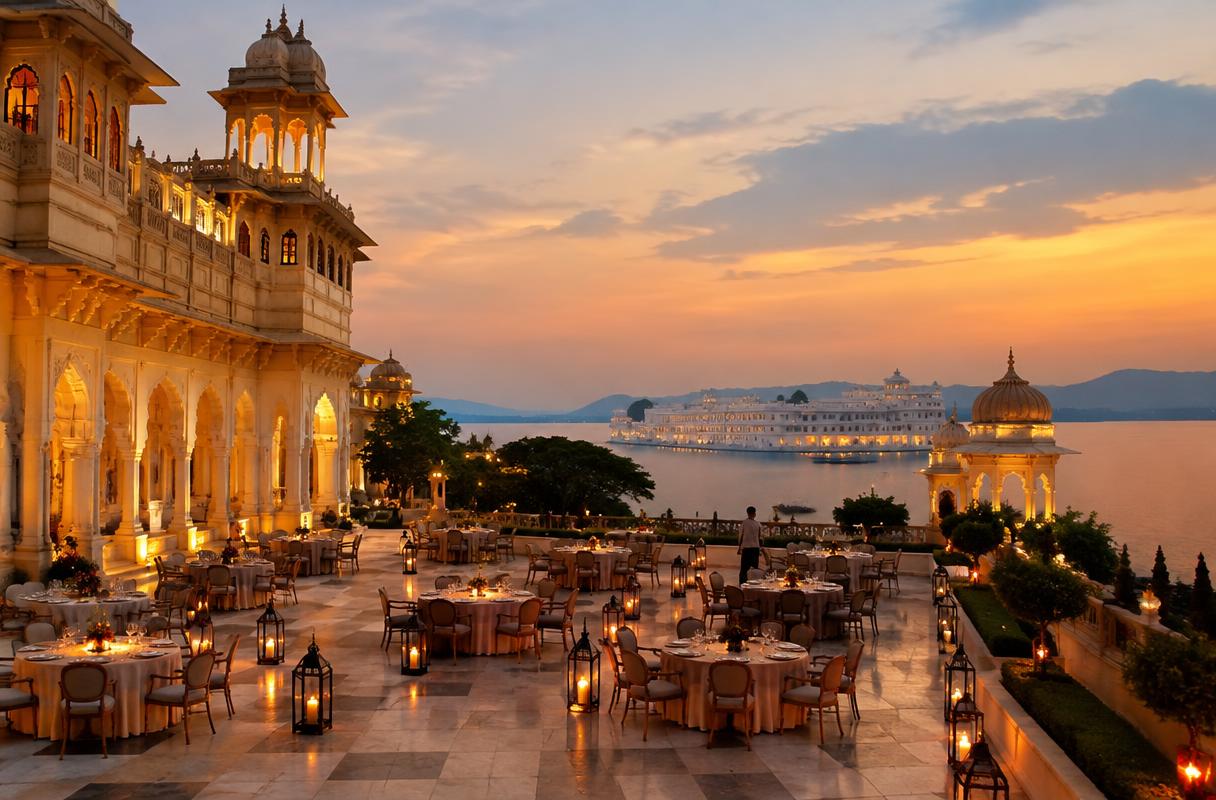
India offers something unusual: genuine range inside one country, one currency and one visa. A programme can open with a plenary at a modern convention centre in Delhi or Hyderabad, move to a palace in Rajasthan for the gala, and finish on a beach in Goa or the Kerala backwaters — with domestic flights of two hours or less between them. Few destinations offer that spread without a second border crossing.
The cost base is the second reason. For comparable hotel standard and production quality, India generally sits below the Gulf and most of Southeast Asia, and the gap widens as the group gets larger because labour and fabrication are locally sourced.
The third is capability. The hotel groups, audiovisual suppliers and production houses operating in India work to international specifications, and the senior operations people you will deal with have usually run events for global audiences. The difficulty is rarely quality; it is navigating process, paperwork and distance.
Visas and entry
Visa handling is where international MICE programmes most often lose a delegate, and it is almost always a timing problem rather than an eligibility one.
Most commercial business delegates travel on an e-Business visa, applied for online in advance. India also operates an e-Conference visa, but it is a distinct category intended for delegates attending conferences, seminars and workshops organised by eligible bodies, and it generally requires the organiser to obtain prior event clearance. Whether your event qualifies depends on who is hosting it and what it is, so confirm the correct category with the official Indian government visa portal, and with your in-country partner, before you communicate anything to delegates.
Whatever the category, give delegates a written briefing at least six to eight weeks out covering the application route, the documents required, passport validity and blank-page requirements, and who to contact if an application stalls. Collect confirmations rather than assuming. For a group of any size, assign one person on your side to chase the stragglers, because there will be stragglers.
Practical points that catch people out
- Apply early. Processing is usually quick, but an individual case that needs review can take considerably longer
- Passport validity and blank pages are checked at entry — verify both before ticketing
- People of Indian origin may hold an OCI card, which changes their entry route entirely; ask the question on the registration form
- Confirm that the entry airport on the visa matches the actual itinerary, especially for multi-city programmes
- Keep a digital copy of every delegate passport and visa with the on-ground team, within whatever data-protection rules apply to you
Choosing a gateway
Pick the entry city for flight connectivity from your delegates' origin markets first, and for venue quality second — a strong venue your group arrives at exhausted is a poor trade.
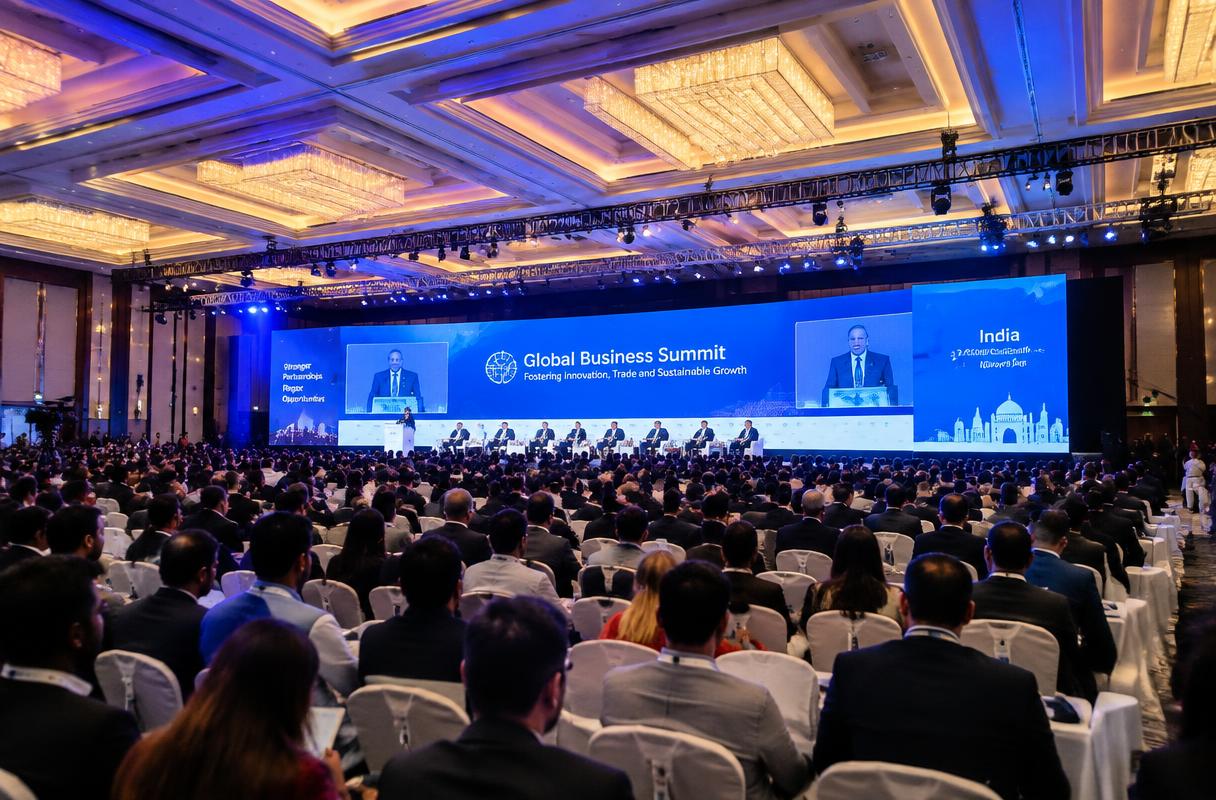
Delhi has the widest long-haul connectivity and the largest convention venues at Bharat Mandapam and Yashobhoomi, plus an airport hotel district that works well for a jet-lagged arrival night. Mumbai suits financial, media and consumer audiences and has the Jio World Convention Centre. Bengaluru is the natural gateway for technology groups. Hyderabad is the smoothest operationally for large conferences, with HICC and HITEX beside a cluster of convention hotels. Chennai and Kochi work well for South Indian industry audiences and for programmes continuing into Kerala.
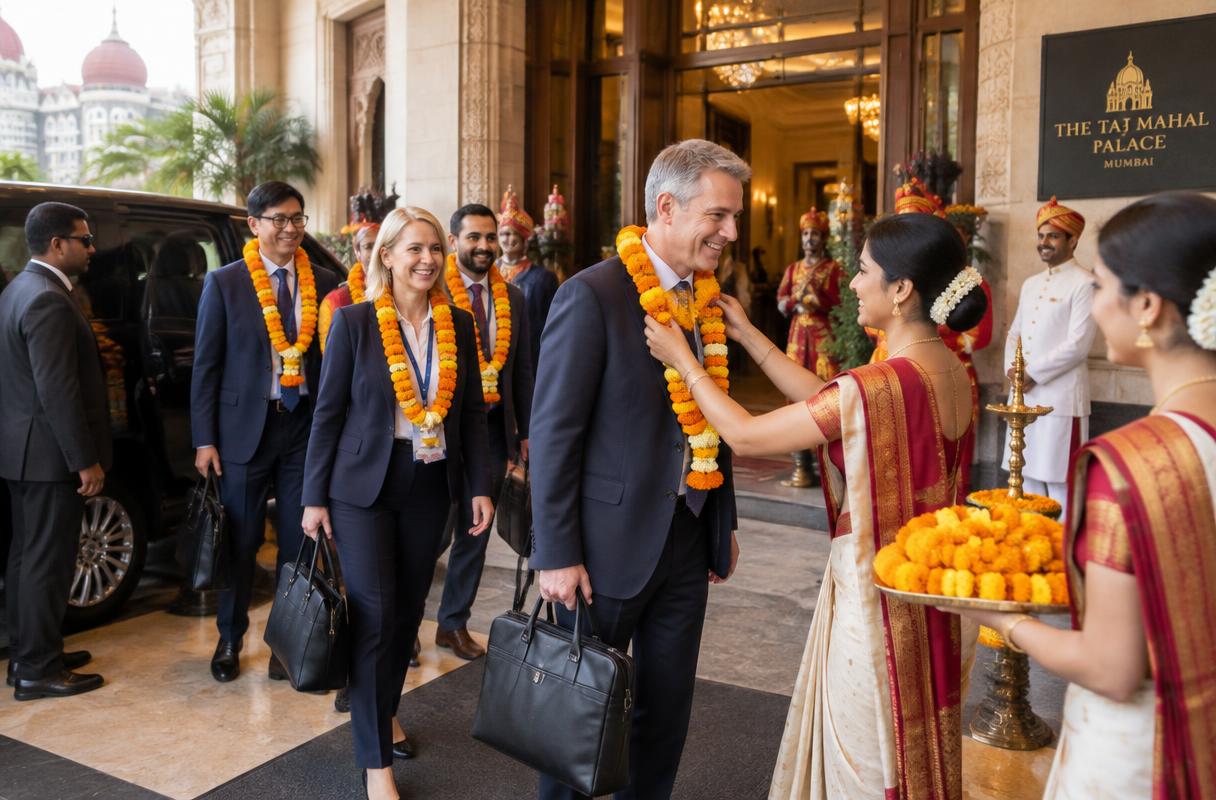
For incentive groups, consider entering through the gateway and immediately transferring out. Arriving into Delhi and flying to Udaipur the next morning gives delegates a soft landing and puts the memorable part of the programme at the front.
Season and weather
October to March is comfortable across most of the country and is when the great majority of international MICE business happens. It is also when rates peak and the best properties sell out, so a programme in this window needs to be contracted early.
April to June is hot across the northern plains and central India. It can still work for fully indoor programmes in metro cities, and it is the best time of year in the Himalayas, Ladakh and the southern hill stations. July to September is the monsoon — unreliable for outdoor formats, excellent value indoors, and genuinely lovely in Kerala and the Western Ghats.
Two scheduling details matter more than the weather. First, check the Indian festival calendar: Diwali, Holi and regional festivals move year to year, affect flight prices, hotel availability and staffing, and can make a date either magical or unworkable. Second, avoid the densest wedding weeks in Rajasthan if you want palace availability at a sane rate.
Book the date around the festival calendar, not just the weather chart. A perfect November week can still be the one week every palace in Udaipur is already sold.
Contracting, payments and tax
The cleanest structure for an overseas buyer is a single contract with one in-country partner who subcontracts locally and issues one consolidated invoice. Managing six Indian vendor relationships from another time zone is possible, but it transfers all the coordination risk to you and usually costs more once internal time is counted.
On tax: event management services in India attract GST at 18%, while hotel accommodation and food and beverage carry their own applicable rates depending on tariff slabs. Ask for a quote that shows tax line by line rather than a single blended figure, and establish early whether your organisation can recover any of it — for most foreign entities without an Indian presence, it cannot, so it should be treated as real cost in the budget.
Agree the currency, the exchange-rate mechanism and the payment milestones in writing. Indian suppliers typically work on staged advances, with a significant proportion due before the event. Many partners, ourselves included, can contract and invoice in major foreign currencies, which removes rate risk from your side but should be priced transparently rather than hidden in the margin.
Duty of care
Most corporate travel policies require a documented duty-of-care plan for group travel, and a generic one will not survive scrutiny. Build a specific plan for the actual itinerary.
- Named hospitals near each venue and each hotel, with distances and a route, not just a city-level reference
- A 24-hour on-ground contact who is physically in the destination, with a backup number
- Medical screening on the registration form, handled confidentially, covering allergies, conditions and medication
- Food and water guidance given once, clearly, without alarmism — reputable hotels and contracted caterers are the norm for group programmes
- Vetted, licensed transport with named drivers, and a manifest for every coach movement
- Group travel insurance confirmed before departure, with the policy details circulated to delegates
- A written contingency for weather, flight disruption and venue failure, with the decision-maker named
Cultural and practical expectations
Catering is the area where international planners most often underestimate complexity. Vegetarian is not a minority preference in India, it is a default for a substantial part of the population, and Jain dietary requirements go further still by excluding root vegetables. Halal, allergen-free and vegan requests are all routine for good hotels, but they must be collected at registration and confirmed with the kitchen in writing, not mentioned on the day.
Alcohol is regulated at state level. Serving hours, dry days and licensing differ across states, and Gujarat and Bihar operate prohibition, with visitor permits available in Gujarat. If a cocktail reception matters to the programme, confirm the position for your specific venue and date before it appears on an agenda.
On scheduling, build buffer into ground movements rather than assuming door-to-door times from a mapping app, particularly in Mumbai and Bengaluru. And allow more time than you think for arrivals: a 300-person group clearing immigration, collecting bags and boarding coaches is a 90-minute operation on a good day.
A realistic timeline
For an international group of 100 to 300 people, work to roughly this shape: destination and dates agreed six months out; venue and hotel contracted five months out; visa and travel briefing issued to delegates eight weeks out; registration closed and rooming list locked four weeks out; production rehearsal the day before.
Compressing this is possible, but every week you remove comes out of either venue choice or delegate preparation, and the second is the one that hurts. If you are evaluating partners, our guide to writing an event RFP sets out what to put in the brief so the proposals you receive are actually comparable.
Gateway cities for international groups
| Gateway | Strongest for | Main venues | Typical onward leg |
|---|---|---|---|
| Delhi | Long-haul access, large congresses, government | Bharat Mandapam, Yashobhoomi | Jaipur, Udaipur, Agra, Rishikesh |
| Mumbai | Finance, media, consumer brands | Jio World Convention Centre | Goa, Alibaug, Udaipur |
| Bengaluru | Technology and user conferences | BIEC, Whitefield hotel cluster | Coorg, Mysuru, Chikmagalur |
| Hyderabad | Large, operationally smooth conferences | HICC, HITEX | Goa, Hampi |
| Kochi | Programmes continuing into Kerala | Bolgatty convention venues | Kumarakom, Alleppey, Munnar |
Where the gateway is purely functional, consider an onward transfer on arrival day plus one so delegates recover before the programme opens.
Planning something like this?
Tell us the brief, get an itemised proposal
Share your dates, group size and destination. You will get a costed, line-by-line proposal from our planning team within 24 hours — with taxes shown separately.
Frequently asked questions
Most commercial business delegates travel on an e-Business visa applied for online in advance. India also operates a separate e-Conference visa for delegates attending qualifying conferences, which generally requires the organiser to hold prior event clearance. Confirm the correct category on the official Indian government visa portal well before communicating with delegates.