In short
MICE stands for Meetings, Incentives, Conferences and Exhibitions — the segment of travel built around business objectives rather than leisure. In India it covers everything from a 20-person board offsite in Lonavala to a 20,000-visitor trade fair at India Expo Mart, and it is bought by corporate teams, associations and government bodies who need people in one room for a reason.
Key takeaways
- MICE is business travel with a measurable objective attached — alignment, reward, knowledge or pipeline
- India's advantage is depth: metro convention centres, heritage palaces, beaches and hill resorts inside one visa
- October to March is the national peak; April to June and the monsoon are buyer's markets in the plains
- Most programmes fail on brief and timeline, not on budget
What MICE stands for
MICE is an acronym the travel industry borrowed from the corporate world, and each letter describes a genuinely different kind of event with different buyers, different budgets and different definitions of success. Treating them as one category is the most common mistake new planners make — a reward trip and a trade fair have almost nothing in common operationally.
M — Meetings
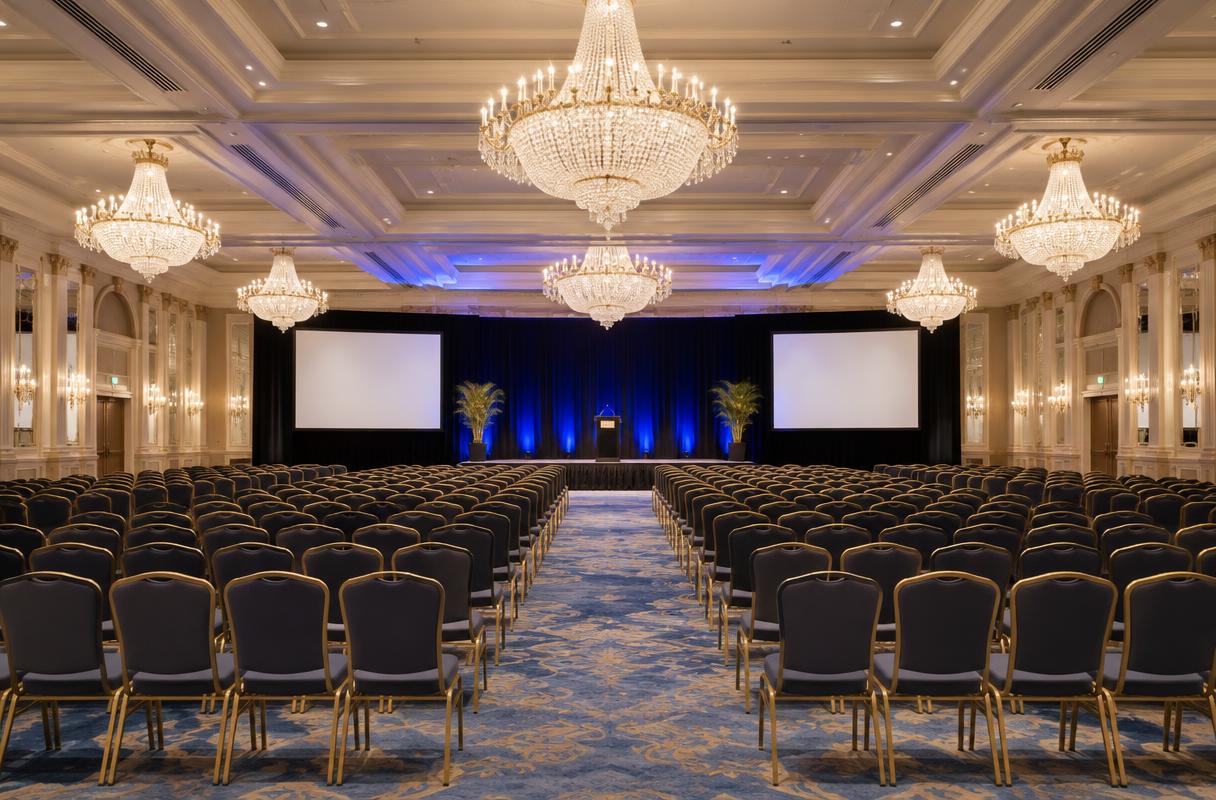
The everyday end of the spectrum: board meetings, sales reviews, training workshops, advisory boards, annual general meetings. Group sizes run from eight to a few hundred. The work is logistical rather than theatrical — the right room, reliable connectivity, food that does not flatten the room after lunch, and transport that absorbs traffic. Our business meetings and board meetings services sit here.
I — Incentives
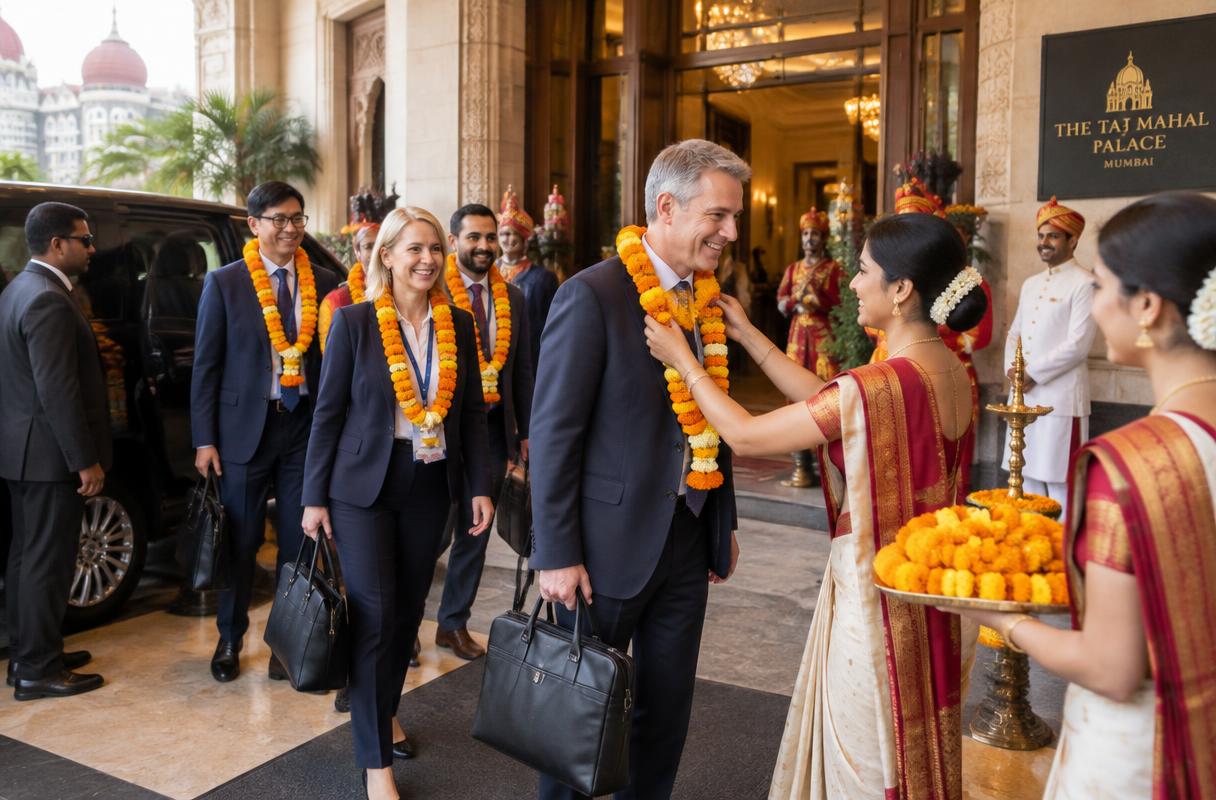
Travel used as a reward. Qualifiers earn a trip through a sales contest or performance programme, and the trip itself carries the recognition. Incentives are the most emotionally loaded format in MICE and the least forgiving: a mediocre conference is survivable, a mediocre reward trip actively damages the programme it was meant to reinforce. See incentive travel for how these are built.
C — Conferences
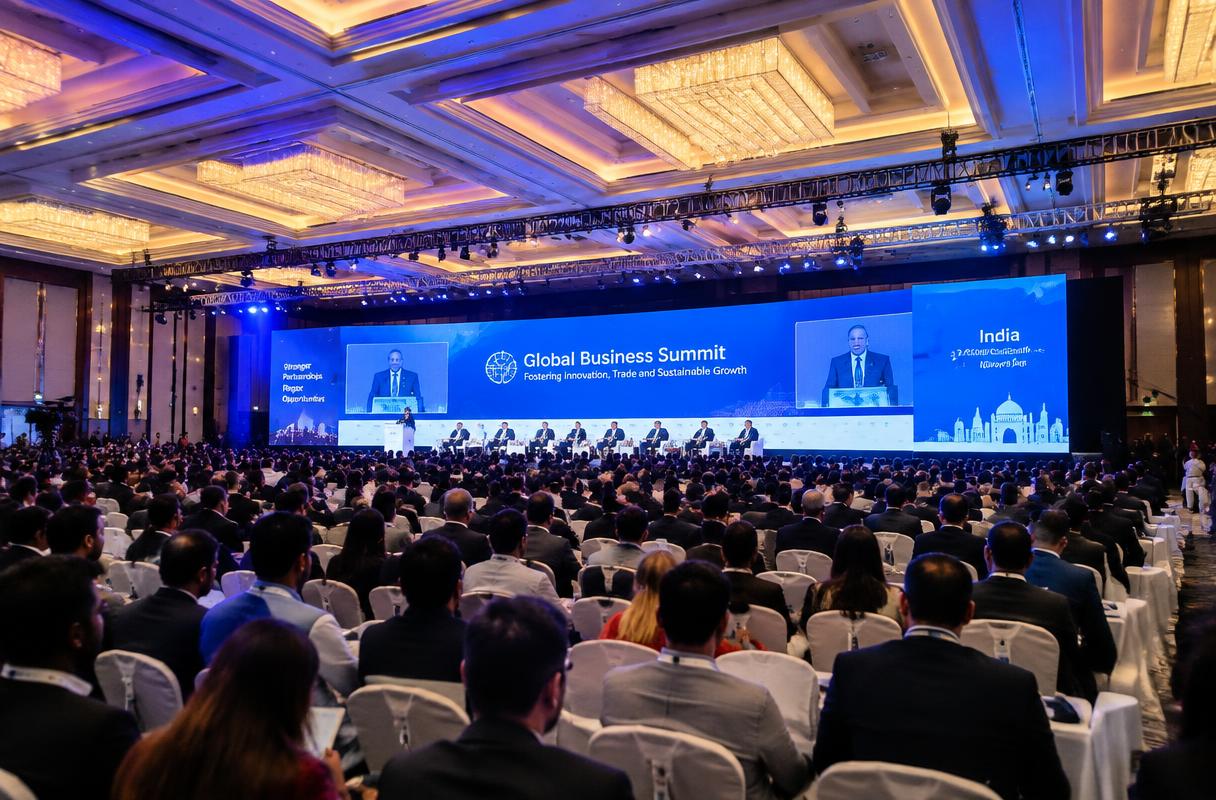
Content-led gatherings: industry summits, scientific congresses, user conferences, dealer meets with a real business agenda. Conferences need a content plan as much as a logistics plan — speaker curation, session design, registration technology and, increasingly, a broadcast layer. Corporate conferences and medical and pharma conferences are the two largest sub-segments in India.
E — Exhibitions
Trade fairs, expos and the stands that populate them. Here the buyer is usually either an organiser filling a hall or an exhibitor trying to generate pipeline from nine square metres of carpet. The economics are unlike the rest of MICE: cost is measured per square metre and success is measured in qualified leads. See exhibition stall design and trade show organisers.
How MICE differs from leisure travel
A leisure traveller chooses, pays and lives with the consequences. In MICE, one person chooses, a company pays, and several hundred people live with the consequences — which changes almost every decision downstream. Risk tolerance drops sharply; nobody books a clever but unproven venue for 400 delegates. Lead times stretch, because budgets are approved in cycles and people need notice to clear diaries.
The commercial relationship is different too. Hotels price group business against displacement — what they would otherwise have earned selling those rooms individually — so group rates track occupancy forecasts rather than published tariffs. Contracts carry attrition clauses, cut-off dates and cancellation grids that a leisure booking never sees. This is why a company that is excellent at booking its own travel can still struggle badly with its first 300-person conference.
The last difference is accountability. A holiday needs no success metric. A corporate event does, and the programmes that get repeated year after year are the ones whose organisers can describe what actually changed afterwards.
Why India has become a serious MICE market
For a long time India exported MICE. Indian companies rewarded their teams in Dubai, Bangkok and Singapore, partly because domestic infrastructure could not host a polished 500-person programme without compromise. That has changed on three fronts at once.
First, venue capacity. Bharat Mandapam and Yashobhoomi in Delhi, Jio World Convention Centre in Mumbai, HICC in Hyderabad, BIEC in Bengaluru, Chennai Trade Centre, Mahatma Mandir in Gandhinagar, India Expo Mart in Greater Noida and the Jaipur Exhibition and Convention Centre give India a tier of purpose-built space it simply did not have two decades ago.
Second, hotel supply. Every major international group now runs multiple properties across Indian metros and in second-tier cities, which means a 300-room block with conference space attached is available in far more places than before — and competition between them is real.
Third, air connectivity. More direct international routes and a dense domestic network make multi-city programmes practical. Combined with a cost base that is usually lower than comparable Southeast Asian or Gulf destinations, the case for hosting in India has become a commercial argument rather than a patriotic one.
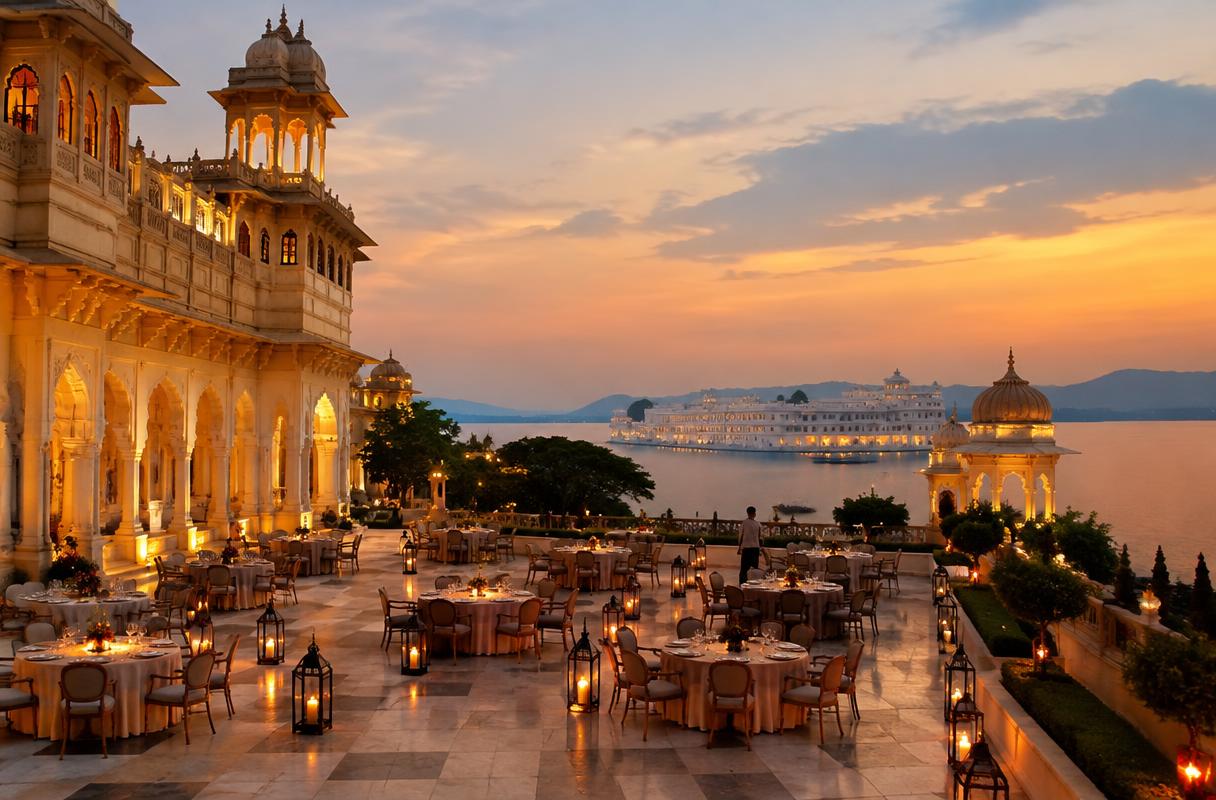
India's real advantage is not price. It is that a palace in Udaipur, a convention centre in Delhi and a beach in Goa all sit inside one visa and one contract.
Who does what: the MICE supply chain
Understanding the roles saves a lot of confusion once proposals start arriving. One company may play several of these, and in India full-service agencies usually do.
- Event management company or PCO — owns the programme end to end: brief, budget, venue, production, delivery and the wrap report
- DMC (destination management company) — the local specialist handling ground arrangements in one destination: transport, hotel blocks, experiences, permits
- Venue — hotel, convention centre, palace or unusual space, selling space, rooms and catering, usually bundled
- Production house — stage, set, LED, sound, lighting and show calling; often the largest single line after accommodation
- Registration and event tech — invitations, badging, check-in, session polling, the mobile app, lead capture on an exhibition floor
- Travel desk — flights, visas, insurance and the traveller tracking that duty of care depends on
Does your event need all of them?
A 40-person offsite needs a venue, a ground partner and one coordinator. A 1,200-delegate annual conference needs every role above, plus somebody whose only job is to hold the master schedule. The practical question is not how many suppliers you engage but how many of them you personally have to manage. Most in-house teams find their ceiling somewhere around five concurrent vendors, which is the point at which a single accountable partner starts paying for itself. We work through that decision in in-house planning versus hiring an event management company.
What a MICE programme costs in India
Cost in MICE is almost always expressed per delegate, because that is the only figure that survives a change in headcount. As indicative planning benchmarks in tier 1 cities, we budget roughly ₹8,000–25,000 per delegate per day for a full-service corporate conference, ₹12,000–50,000 per person for a residential offsite, and ₹25,000–1,20,000 per person for a domestic incentive trip, depending on how much of the experience is bespoke. Tier 2 cities typically land around 15% lower for comparable quality — heritage palace properties being the deliberate exception.
Those ranges are wide for a reason. The same brief can double in price depending on hotel category, how much custom production the stage demands, whether guests fly or drive, and whether you are buying in peak season. Our corporate event budget guide for India breaks the drivers down line by line.
The Indian MICE calendar
Seasonality in India is unusually sharp, and getting it wrong costs more than any negotiation will save you.
October to March is the national peak. Weather is good almost everywhere, the festive and awards season is running and corporate calendars are active. Rates are highest, availability is tightest, and the best venues in Rajasthan, Goa and Kerala sell out months ahead — particularly where wedding season collides with corporate demand.
April to June is hot across the plains and is a genuine buyer's market in cities like Delhi, Jaipur and Ahmedabad. It is simultaneously high season in the hills, so Shimla, Manali, Ooty, Coorg and Ladakh follow the opposite pricing curve.
July to September is the monsoon. Indoor conferences in metros run perfectly well and are inexpensive; outdoor formats are a gamble. Kerala and the Western Ghats are genuinely beautiful in the rain and priced accordingly, which makes the monsoon the most underrated window in the year for a wellness or leadership retreat.
Permissions, tax and compliance
The paperwork around an Indian event is manageable, but it is not optional, and it is where inexperienced organisers lose the most time.
- GST — event management services are taxed at 18%. Hotel accommodation and food and beverage are taxed at their own applicable rates, which depend on tariff slabs and have been revised more than once. Insist on a quote that shows tax per line rather than one blended figure
- Liquor service — alcohol licensing is a state subject, so rules, serving hours and dry days vary. Gujarat and Bihar operate prohibition, with visitor permits available in Gujarat. Always confirm in writing who holds the licence for your event
- Music — playing recorded or live music at a commercial event generally requires a licence from the relevant copyright societies. Some venues hold one; never assume
- Fire and safety NOC — required for temporary structures, large gatherings and most outdoor builds, and issued locally
- Pharma events — companies operate under the Uniform Code for Pharmaceutical Marketing Practices, which constrains hospitality offered to healthcare professionals. Compliance shapes venue choice, agenda design and documentation, not just the invoice
How to run your first MICE programme
Work backwards from the outcome, not forwards from the venue. Write one sentence describing what should be different after the event, pick two or three measures that would prove it, then let those choices drive destination, format and spend. A recognition programme and a strategy offsite should not end up at the same resort by accident.
Then protect the timeline. For groups under 100 outside peak season, eight to twelve weeks is workable. For anything over 250, or anything at all between October and March, start four to six months out. Nearly everything that goes wrong in MICE is downstream of a compressed timeline.
Finally, rehearse. A full technical run-through the day before catches more problems than any volume of planning documentation, and it remains the cheapest insurance in the business.
Planning something like this?
Tell us the brief, get an itemised proposal
Share your dates, group size and destination. You will get a costed, line-by-line proposal from our planning team within 24 hours — with taxes shown separately.
Frequently asked questions
Meetings, Incentives, Conferences and Exhibitions. It describes travel and events organised for a business purpose rather than leisure, and is used as an umbrella term for the industry that serves them.
Start with a format
The four MICE pillars, as we deliver them.