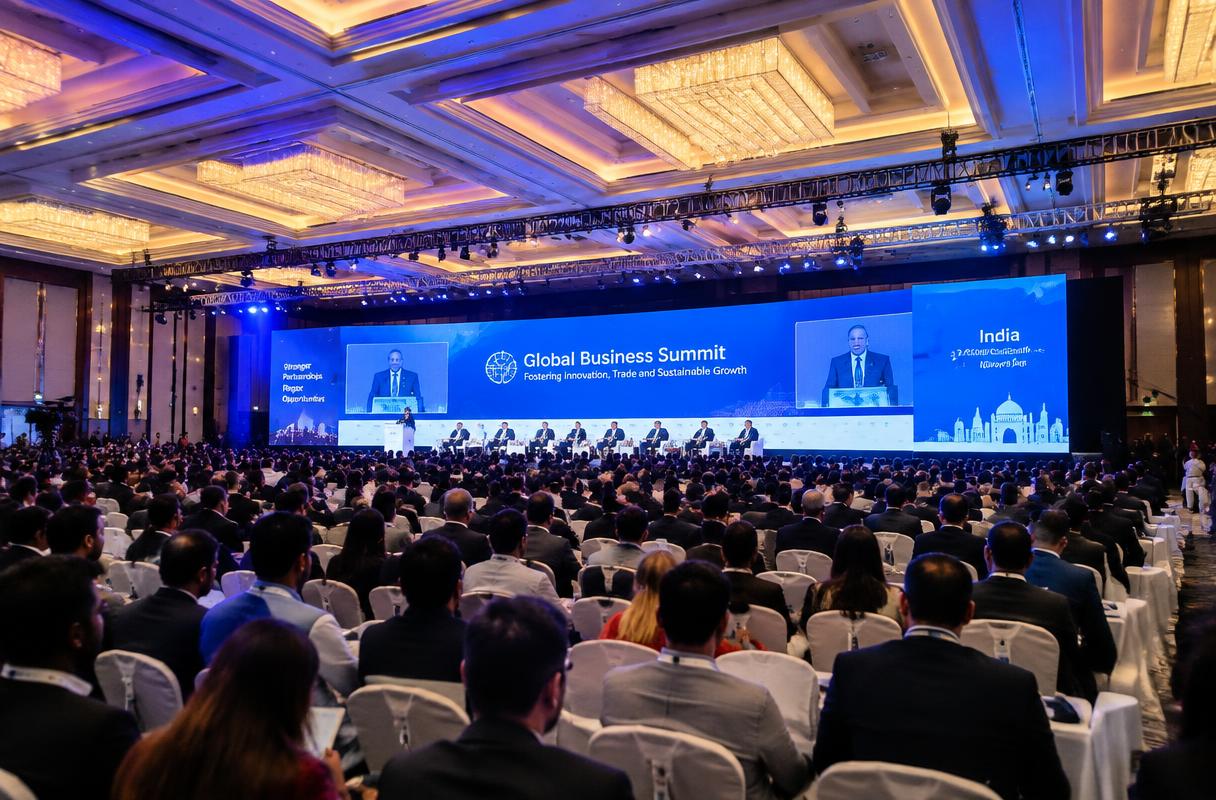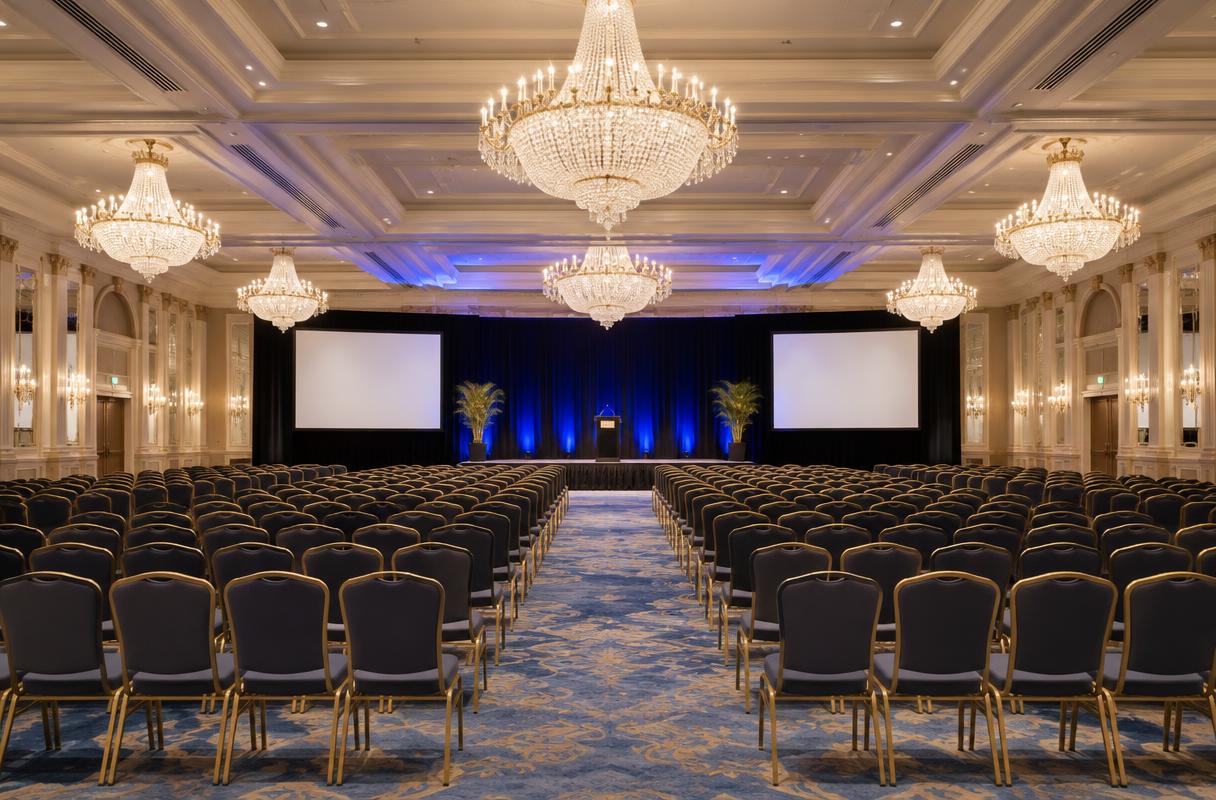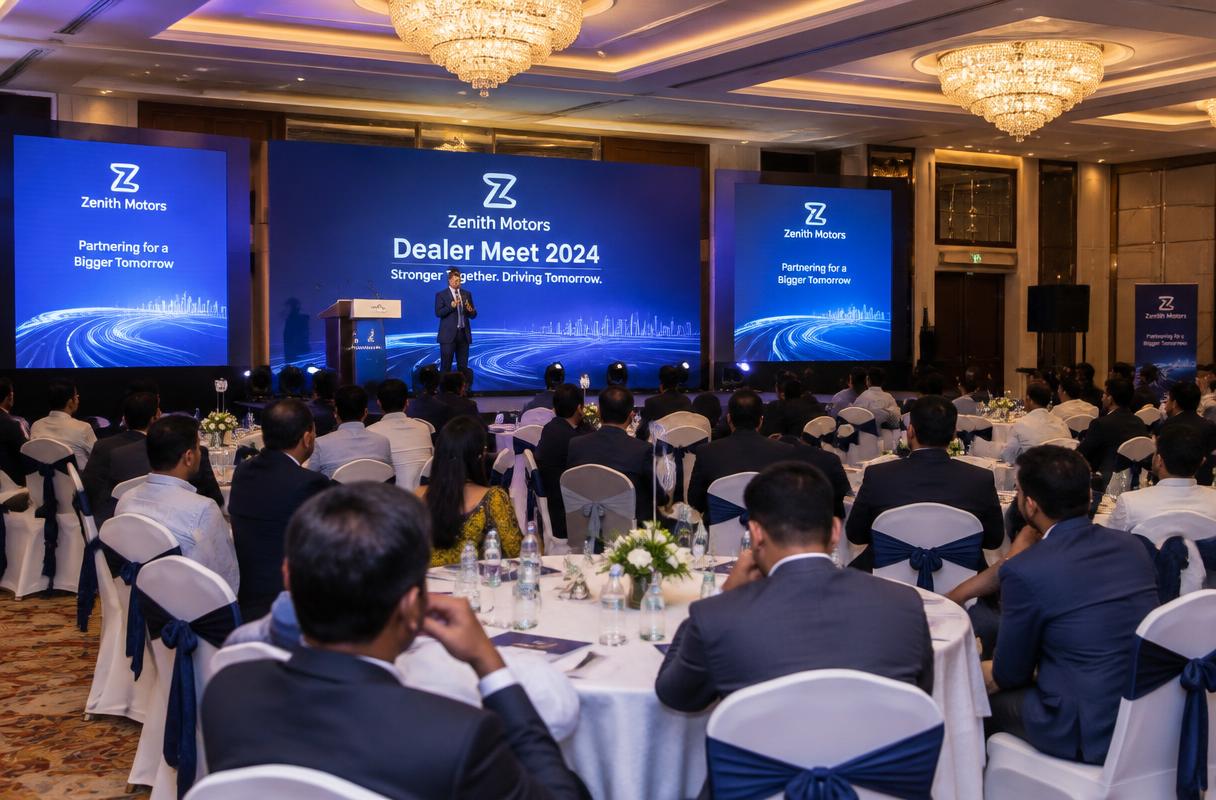
In short
Decide first what the online audience is for: reach, inclusion or a recording. Then pick one of three models — a simple stream of a physical event, a true hybrid designed for both rooms at once, or a virtual-first broadcast. Budget for a dedicated wired internet line, a vision mixer and a separate online host, because those three things are what separate a watchable broadcast from a camera pointed at a stage.
Key takeaways
- An online audience is a second audience, not an overflow room
- A dedicated wired line is non-negotiable; hall wifi is not a broadcast connection
- Someone must host the online audience by name — a stream without a host loses people in minutes
- Online attention spans are shorter: shorter segments, more movement, more interaction
First decide what the online audience is for
Most disappointing hybrid events fail at this question rather than at any technical one. Adding a stream because it seems modern produces a camera at the back of a room, a flat wide shot, no host, and an audience that leaves after four minutes.
There are three legitimate reasons to have an online audience, and each produces a different event. Reach: people who were never going to travel but are worth including — customers, partners, a global employee base. Inclusion: people who would have attended but cannot, where the goal is parity of experience rather than scale. Archive: the content has a life after the day, and the recording is the real product.
Write down which of the three applies, because it determines how much of the budget belongs on the broadcast side and how the agenda should be designed.
Three models, three different events
The word hybrid covers formats that have very little in common operationally. Be explicit about which one you are buying.
Streamed physical event
A conventional in-room event with a broadcast layer added. The room is the primary audience; the stream is a faithful record. This is the cheapest option and entirely reasonable when the online audience is secondary — but say so internally, so nobody expects online engagement it was never designed to produce.
True hybrid
Both audiences are designed for. The agenda is built in shorter segments, questions come from both rooms, an online host carries the virtual audience between sessions, and the physical set is designed to read on camera. This is the most expensive and most demanding model, because you are effectively producing two shows at once.
Virtual-first broadcast
No general audience in the room at all — presenters in a studio or on a small set, everything produced for the camera. Often the best value when the audience is large and distributed, because you stop paying for travel, accommodation and catering entirely and put the money into production quality. Our hybrid and virtual events service covers all three.
The production stack
A watchable broadcast is a chain, and the chain is only as good as its weakest link. For a professional result, expect the following.
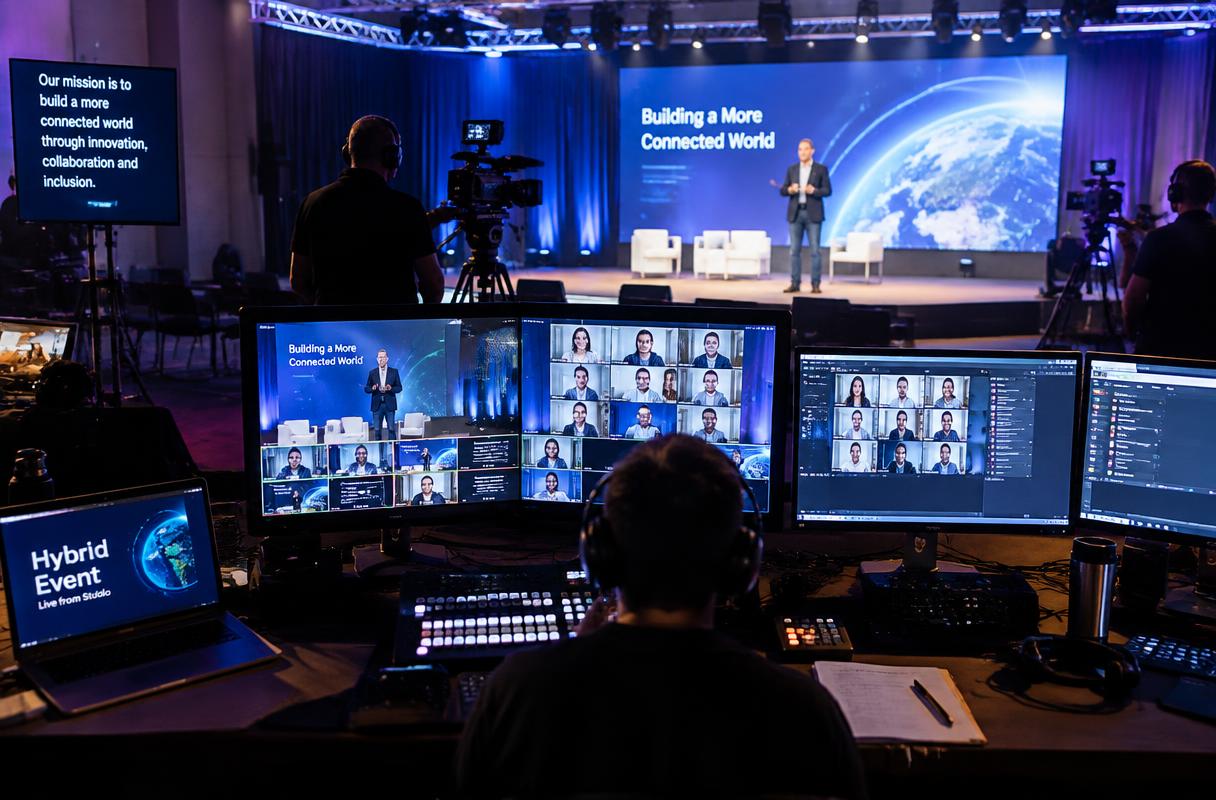
- Cameras — a minimum of two for any speaker-led session, so the picture can cut rather than zoom. Three or more once you have a panel or audience reactions
- Vision mixing — a switcher and an operator cutting between cameras, slides and video playback live. This single role is the biggest visible difference between amateur and professional output
- Audio — a dedicated feed from the sound desk to the encoder, never a camera microphone. Poor audio loses an online audience faster than poor video, by a wide margin
- Lighting — faces lit for camera, not for the room. Stage lighting designed for a live audience usually renders as silhouette on a stream
- Graphics — lower thirds, titles, holding slides between sessions. Dead air with no graphic reads as a technical fault even when nothing is wrong
- Encoding and redundancy — a hardware encoder, ideally with a bonded or secondary connection to fail over to
- Recording — captured locally as well as to the platform, because the cleanest archive is the one that never went through the internet
The online audience will forgive a mediocre picture. They will not forgive bad sound, and they will not stay through silence between sessions.
Connectivity is the thing that fails
Venue wifi shared with several hundred delegates is not a broadcast connection, and treating it as one is the most common cause of a visible failure. Specify a dedicated wired line for the production, provisioned and tested days before the event, with guaranteed symmetric bandwidth rather than a best-effort consumer service.
Then build redundancy: a second line from a different provider, or a bonded cellular unit as failover. Test the actual upload path, at the actual hour of the event, with the actual encoder — not a speed test at 9am on a quiet Tuesday. Ask the venue for the technical contact rather than the sales contact, and get the bandwidth commitment in writing.
Indian convention centres and major hotels can generally provide this, but it must be ordered, and it will be a line item. Budget for it explicitly during venue selection rather than discovering it in the final week.
Designing content for two audiences
An in-room audience has committed. They travelled, they are surrounded by peers, and social pressure keeps them seated through a slow segment. An online audience has a browser with other tabs in it and no social cost to leaving.
Design accordingly. Keep segments to roughly 20 minutes before something changes — a new speaker, a different format, a break. Replace long single-speaker sessions with interviews or panels, which are more watchable on camera. Build in interaction that both audiences can join: polls, Q and A submitted from either room, and results displayed on the main screen so the in-room audience sees that the online audience exists.
Make the breaks explicit for the online audience, with a countdown graphic and a stated return time. Online attendees who do not know when the stream resumes do not come back.
Give the online audience a host
This is the highest-return, lowest-cost decision in hybrid production, and it is the one most often skipped. Appoint someone whose only job is the online audience: welcoming them, explaining what is coming, moderating chat, surfacing their questions to the stage, and filling the gaps around breaks.
Without a host, an online audience is a spectator at someone else's meeting. With one, they are participants, and the difference in retention is immediately visible in the numbers. The role does not need to be a broadcast professional — an articulate internal person who knows the content is usually better than a hired presenter who does not.
Choosing a platform
Platform choice matters less than people expect, and it should be driven by requirements rather than by features in a sales deck.
- How many concurrent viewers, and where are they? International audiences need a platform with delivery capacity in their regions
- Is registration gated, and does it need to integrate with your CRM or marketing automation?
- Do you need breakout rooms, networking or one-to-one meetings, or just a stream with chat and Q and A?
- What analytics do you need afterwards — attendance duration, poll responses, questions asked, drop-off points?
- Will the recording live on afterwards, and who hosts it?
- What are the data residency and security requirements, particularly for regulated industries or internal all-hands content?
Simpler is usually better
For most corporate events, a reliable streaming platform with chat, Q and A and polling beats a feature-rich virtual venue with avatars and a 3D lobby. Novelty interfaces increase support load, confuse less technical attendees and rarely survive contact with a real audience. Spend the money on production quality instead.
The team and the rehearsal
A credible hybrid production needs, at minimum: a technical director, a vision mixer operator, a sound engineer, camera operators, a graphics operator, a show caller running the running order, and the online host. On a smaller event some of these combine, but the roles still exist and someone has to own each one.
Rehearse with every presenter, including the remote ones. Remote speakers should be tested individually days in advance for camera framing, lighting, background and above all audio — a laptop microphone in a hard-surfaced room is the most common defect in otherwise competent broadcasts. Give each of them a wired headset and check their upload speed.
Then rehearse the whole show end to end the day before, with the real deck, real transitions and the stream running to a private endpoint. Hybrid events have more moving parts than in-room events and correspondingly more ways to fail quietly.
Cost and measurement
As an indicative planning range, we budget roughly ₹1,500–8,000 per participant for hybrid and virtual production in India, with the spread driven almost entirely by camera count, set build and whether the event is a simple stream or a full dual-audience production. The fixed production block dominates, so cost per participant drops sharply as the online audience grows — which is the main economic argument for the format.
Measure both audiences separately. For online, track registration-to-attendance conversion, average watch duration, drop-off by segment, questions asked and poll participation. Drop-off by segment is the most useful of these: it tells you exactly which part of your agenda lost people, and that is information an in-room event never gives you.
Which hybrid model fits
| Model | Primary audience | What it needs | Best for |
|---|---|---|---|
| Streamed physical event | The room | Two cameras, audio feed, encoder, dedicated line | Archive and secondary reach on a modest budget |
| True hybrid | Both equally | Full stack, online host, agenda rebuilt in short segments | Distributed organisations where parity matters |
| Virtual-first broadcast | Online | Studio or small set, full production, no delegate logistics | Large distributed audiences, product and partner updates |
Cost per participant falls as the online audience grows, because the production block is largely fixed.
Planning something like this?
Tell us the brief, get an itemised proposal
Share your dates, group size and destination. You will get a costed, line-by-line proposal from our planning team within 24 hours — with taxes shown separately.
Frequently asked questions
A streamed event is a physical event with a broadcast added; the room is the real audience. A true hybrid is designed for both audiences at once — shorter segments, an online host, questions taken from both rooms, and a set built to read on camera.