In short
Choose a dealer meet format by what the channel needs this year. A national annual meet suits a strategy reset or major launch; regional cluster meets suit depth and genuine two-way conversation; an awards night suits recognition; an enablement workshop suits a new product or process; and a dealer incentive trip suits rewarding the top tier. Most mature channel programmes run two or three of these in a year rather than one event trying to do everything.
Key takeaways
- Segment the channel before designing the agenda — the top 20 and the long tail need different events
- Dealers remember recognition and the scheme announcement; they forget the presentations
- Cap the podium time and build in structured two-way conversation, or you will learn nothing
- Regional cluster meets consistently beat one giant national meet for anything requiring dialogue
What a dealer meet is actually for
Channel partners are independent businesses. They stock your products alongside competitors, they allocate their own working capital, and their loyalty is a commercial decision renewed continuously. A dealer meet is the one occasion each year when you have their full attention, and the question worth asking before anything else is: what do we need them to do differently after this?
There are usually three honest answers. Sell more of a specific thing — a new product, a higher margin line, a strategic category. Work differently — adopt a new ordering system, improve service standards, meet a display requirement. Or simply stay — in markets where a competitor is actively recruiting your dealers, retention is a legitimate objective in its own right.
Each answer implies a different event. A retention-led meet is mostly hospitality and recognition. An enablement-led meet is mostly workshop. A launch-led meet is mostly production and experience. Running all three in one agenda is how dealer meets end up as nine hours of presentations with a cultural programme at the end.
Segment the channel first
Treating the whole channel as one audience is the commonest structural mistake. Your top partners by volume have different concerns from the long tail, and putting them in the same room forces the content to the lowest common denominator.
Segment before you design. The top tier wants strategic conversation, margin and exclusivity, and access to senior leadership. The middle tier wants growth support, training and the credible sense that they could reach the top tier. The long tail wants simple, practical help — product knowledge, ordering, credit terms, service response.
In practice this usually resolves into either separate events per tier, or one event with tier-specific tracks and a senior-only session alongside the main programme. The second is efficient; the first is better when the strategic conversation needs candour.
If your top ten partners and your smallest hundred are hearing the same presentation, at least one of those groups is wasting their day.
Six formats and when each works
Most channel programmes are built from combinations of the following. The useful discipline is naming which one you are running, because it determines venue, budget shape and agenda.
1. The national annual meet
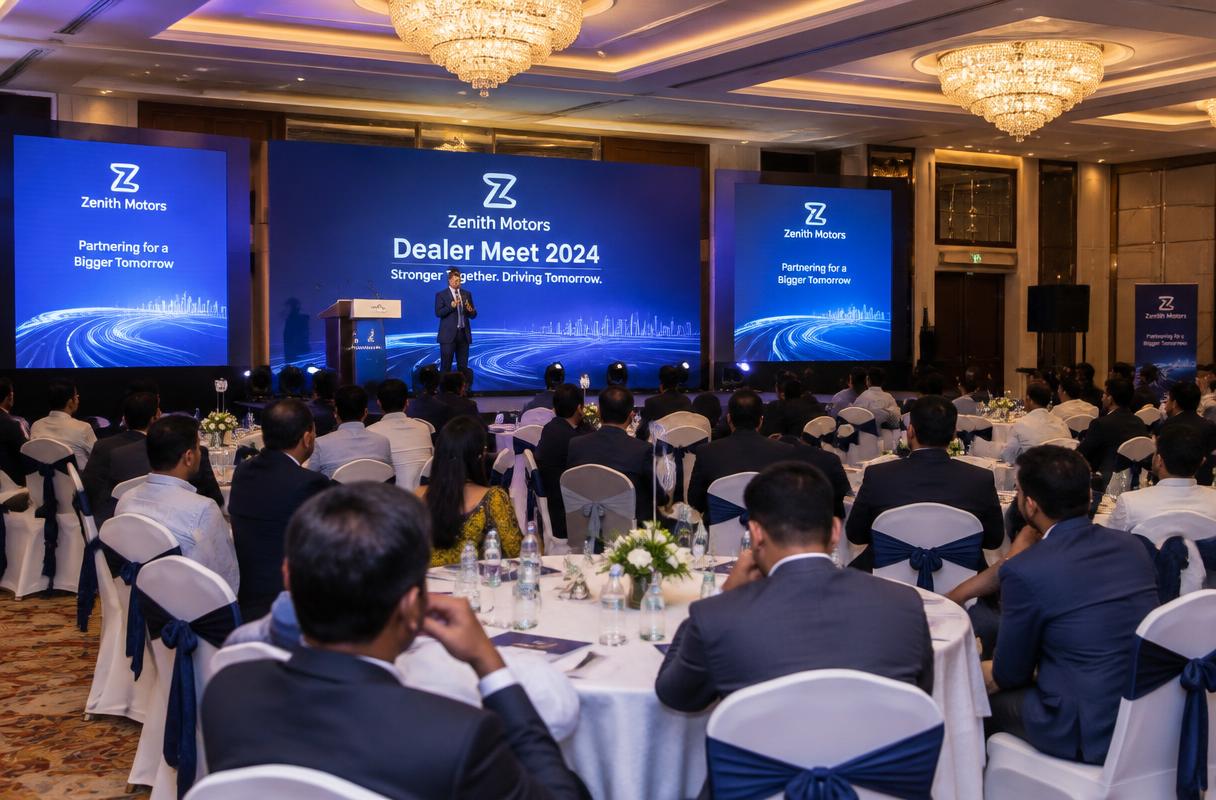
The flagship: the whole channel in one place, usually once a year, built around strategy, launches and recognition. High production, high cost, high visibility. It works when there is genuinely something big to say. It fails when it is held out of habit, because a channel that travels for an event with no news notices immediately. See dealer meets.
2. Regional cluster meets
The same content delivered in four to eight regional events of 50 to 150 partners each. Lower production value, far better conversation, and dealers do not lose three days to travel. For anything requiring genuine two-way dialogue — pricing changes, service complaints, territory discussions — this format consistently outperforms the national meet, and the travel cost across the year is often lower.
3. Launch-led meet
Built around a product reveal, with the commercial terms attached. The event is essentially a product launch with a channel audience: a reveal moment, hands-on time with the product, and clear first-order incentives. The common failure is revealing the product and leaving the dealer unsure what it costs them and what they make on it.
4. Awards and recognition night
A standalone evening, often attached to another format. Done well it is the highest-return evening in the channel calendar, because recognition in front of peers is something partners genuinely value and competitors cannot easily replicate. Done badly — too many categories, unclear criteria, the same names every year — it is actively demotivating. See award ceremonies.
5. Enablement workshop
Small groups, hands-on, training-led. Product knowledge, demonstration technique, digital tools, service processes. Unglamorous and the most directly useful format of all, particularly for the long tail. Run these regionally, keep groups under 40, and send trainers rather than regional sales managers. Seminars and workshops covers the setup.
6. Dealer incentive trip
A reward trip for qualifying partners, run on the same principles as a sales incentive — earned, visible and aspirational. Frequently the most effective loyalty mechanism available in a channel business, and worth measuring properly. See measuring incentive travel ROI and corporate incentive tours.
Fix the agenda problem
The default dealer meet agenda is a sequence of internal departments presenting to a captive audience. Sales presents the year. Marketing presents the campaign. Finance presents the scheme. Supply chain presents the service improvements. By the fourth deck the room is on its phones, and the organisation concludes that dealers are not engaged.
Cap total podium time at around a third of the working day. Replace the rest with formats where the channel speaks: moderated panels with partners on stage, table discussions with a facilitator and a reporting-back slot, product hands-on time, and a genuinely open question session with leadership present and not defensive.
The best single addition to most dealer meet agendas is a structured listening session — small groups, a neutral facilitator, three specific questions, and someone writing down the answers. The information is valuable and the symbolism is more valuable still.
Designing recognition that works
Recognition is the part dealers talk about afterwards, so it deserves more design attention than it usually gets.
- Publish the criteria in advance, and make them objective. Awards that look discretionary create more resentment than motivation
- Have categories that different partners can realistically win — growth percentage alongside absolute volume, so smaller partners are not competing against the largest on a metric they cannot reach
- Keep the number of awards proportionate. An evening with forty trophies devalues all of them
- Give the award in front of peers, with the dealer's family present if they have travelled. In family-run channel businesses this matters enormously
- Photograph every winner properly and send the images within a week — they will be displayed in the showroom, which is free brand presence for a year
- Recognise long service and multi-generational partnerships, not only this year's numbers
The commercial conversation
Dealers attend for the commercial content, whatever else is on the agenda. Handle it badly and the rest of the event does not compensate.
Announce schemes with complete clarity: what the target is, over what period, what the partner earns, how it is calculated and when it is paid. Put it in writing in the delegate pack rather than leaving it on a slide. If the scheme is complex, run a worked example for a typical partner on stage — the room will be doing the arithmetic anyway and it is better that they do it with your numbers.
If there is bad news — a price increase, a margin change, a territory restructure — deliver it in the main session from a senior person rather than letting it leak through side conversations. Channel partners respond far better to being told directly than to discovering something afterwards, and the credibility earned carries into the next difficult conversation.
Logistics particular to Indian channel events
Dealer audiences differ from internal corporate audiences in ways that affect planning more than people expect.
- Spouses and family frequently attend, especially for award evenings and incentive trips. Decide the policy early and communicate it clearly, because assumptions here cause real friction
- Language varies by region. For regional meets, run the session in the regional language or provide interpretation; a national meet in English alone will lose part of the room
- Dietary requirements skew more conservative than a metro corporate audience — plan generous vegetarian and Jain options as standard rather than on request
- Partners are business owners who cannot leave their business for long. Two nights is usually the practical ceiling, and arrival and departure timings should respect trading hours
- Travel is often by road from smaller towns. Build arrival buffers and plan for a long tail of late arrivals rather than a clean registration window
- Seating and protocol carry weight. Think about who sits where at dinner, and make sure senior leadership circulates rather than clustering at one table
Measuring it
Dealer meets are frequently unmeasured, which makes their budget vulnerable in a difficult year. Agree the measures beforehand.
Useful ones include order intake during and immediately after the event, scheme enrolment rate, attendance rate by tier as a loyalty signal, the volume and quality of feedback captured in listening sessions, and partner retention over the following year. Compare attendees with non-attendees on at least one commercial measure — it is imperfect but it is far better than nothing, and it is the number that protects the budget.
Send a short feedback form within 48 hours and ask one open question about what the company should do differently. Partners answer that question honestly far more often than they answer it in the room.
Dealer meet formats compared
| Format | Typical size | Best for | Main risk |
|---|---|---|---|
| National annual meet | 300 – 2,500 | Strategy reset, major launch, national recognition | Becomes habit with no news to justify it |
| Regional cluster meets | 50 – 150 per event | Dialogue, regional issues, language-specific content | Message drifts between regions without tight briefing |
| Launch-led meet | 150 – 1,000 | New product with commercial terms attached | Reveal lands, commercials do not |
| Awards night | 150 – 1,500 | Recognition and loyalty | Too many categories, unclear criteria |
| Enablement workshop | 20 – 40 per session | Product knowledge and process adoption | Sent to the wrong tier of partner |
| Dealer incentive trip | 20 – 200 | Rewarding and retaining the top tier | Qualification set so high only the usual names reach it |
Most mature channel programmes run two or three of these across a year rather than asking one event to do everything.
Planning something like this?
Tell us the brief, get an itemised proposal
Share your dates, group size and destination. You will get a costed, line-by-line proposal from our planning team within 24 hours — with taxes shown separately.
Frequently asked questions
As an indicative planning range, ₹7,000–22,000 per delegate per day in tier 1 cities, with tier 2 around 15% lower. Production scale, hotel category and whether spouses attend are the biggest variables.