In short
Destination weddings and corporate offsites often use the same Indian venues and vendors, but they are planned differently. Weddings run on longer lead times, multi-stakeholder family decisions, emotional budget flexibility and a multi-day ritual sequence. Offsites run on shorter lead times, a single corporate decision-maker, fixed approved budgets and a working agenda where travel time is lost productivity. Confusing the two is the most common reason a planner underperforms in the other discipline.
Key takeaways
- Weddings optimise for memory; offsites optimise for outcome
- Wedding decisions are emotional and plural; offsite decisions are commercial and singular
- Wedding lead times run 9–18 months; offsites commonly run 8–16 weeks
- Both compete for the same venues on the same dates — which is why offsite planners should avoid peak wedding weeks
Why the comparison matters
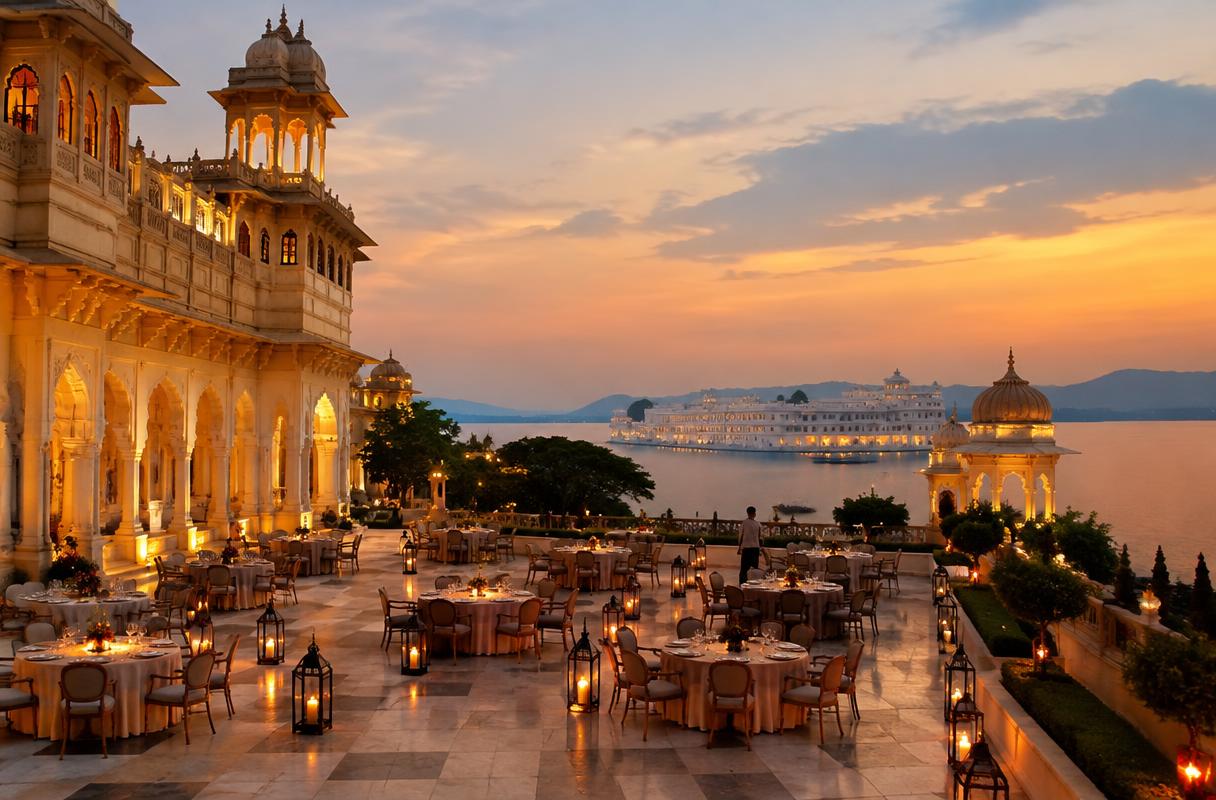
In India these two formats share a supply chain almost completely. The palace in Udaipur that hosts a 300-guest wedding in December hosts a leadership summit in February. The decor vendor, the lighting crew, the transport fleet and the hotel sales manager are the same people. From the outside, the two look like variations on one job.
They are not, and the difference is not scale or budget — it is what the event is for. A wedding is designed to be remembered. An offsite is designed to produce a result. Everything else follows from that, and planners who apply wedding instincts to a corporate programme produce beautiful events that achieve nothing, while planners who apply corporate instincts to a wedding produce efficient events that feel cold.
Who decides, and how
A corporate offsite usually has one accountable buyer — an HR lead, a marketing head, an executive assistant acting for a CEO — operating inside an approved budget with a procurement process behind them. Decisions take a few days, are made on written proposals, and once made they tend to hold.
A destination wedding has a decision-making group: the couple, one or both sets of parents, and often an aunt whose opinion carries more weight than the org chart suggests. Decisions are made emotionally, revisited, and sometimes reversed late. This is not dysfunction, it is the nature of the event, and a planner who treats it as dysfunction will have a difficult year.
The practical consequence is in how you present options. For a corporate client, three costed options with a clear recommendation works. For a wedding family, you are facilitating consensus — present fewer options, show them visually, and sequence the decisions so the ones that unlock other decisions are taken first.
An offsite planner sells a recommendation. A wedding planner builds a consensus. The skills barely overlap.
Objective and success measure
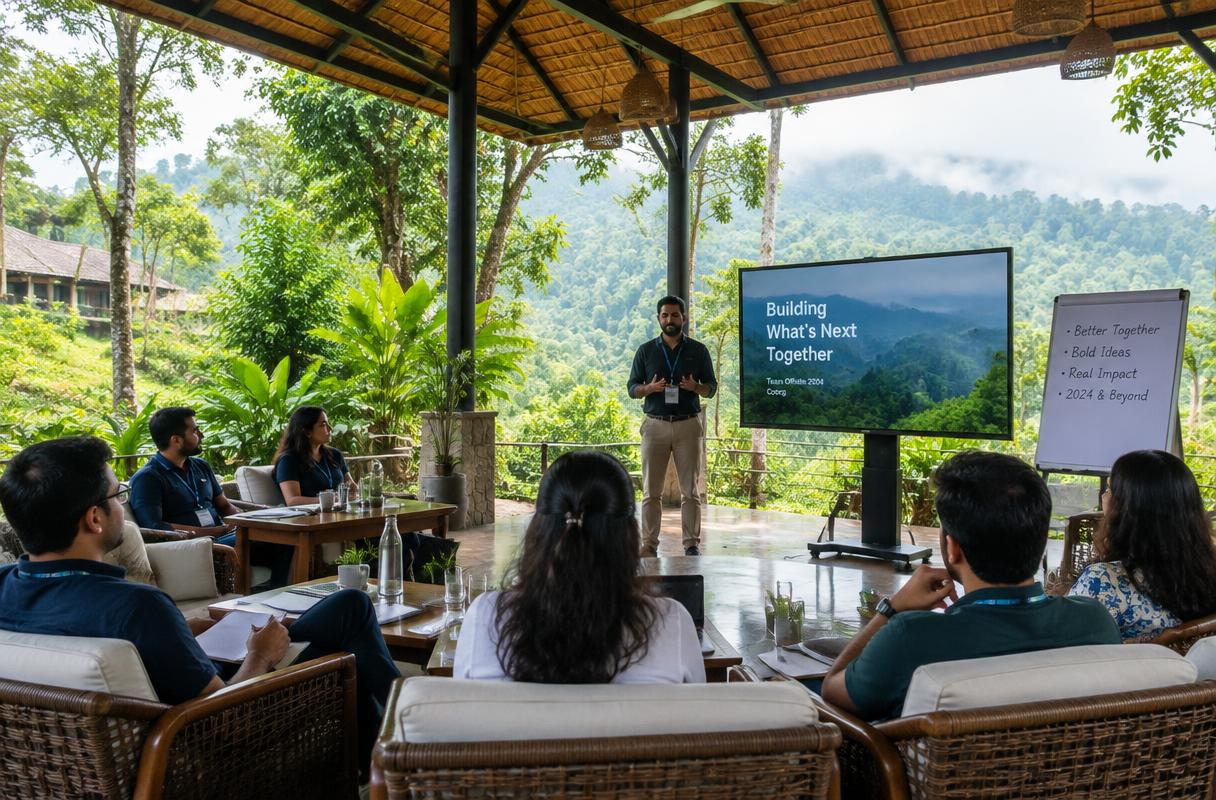
An offsite has a stated purpose: align a team, set a strategy, reward a quarter, integrate a merged function. Success is measurable, at least partially, through feedback scores, decisions made and whether the actions agreed in the room actually happened. The agenda is the product; see our corporate offsite playbook for how it should be built.
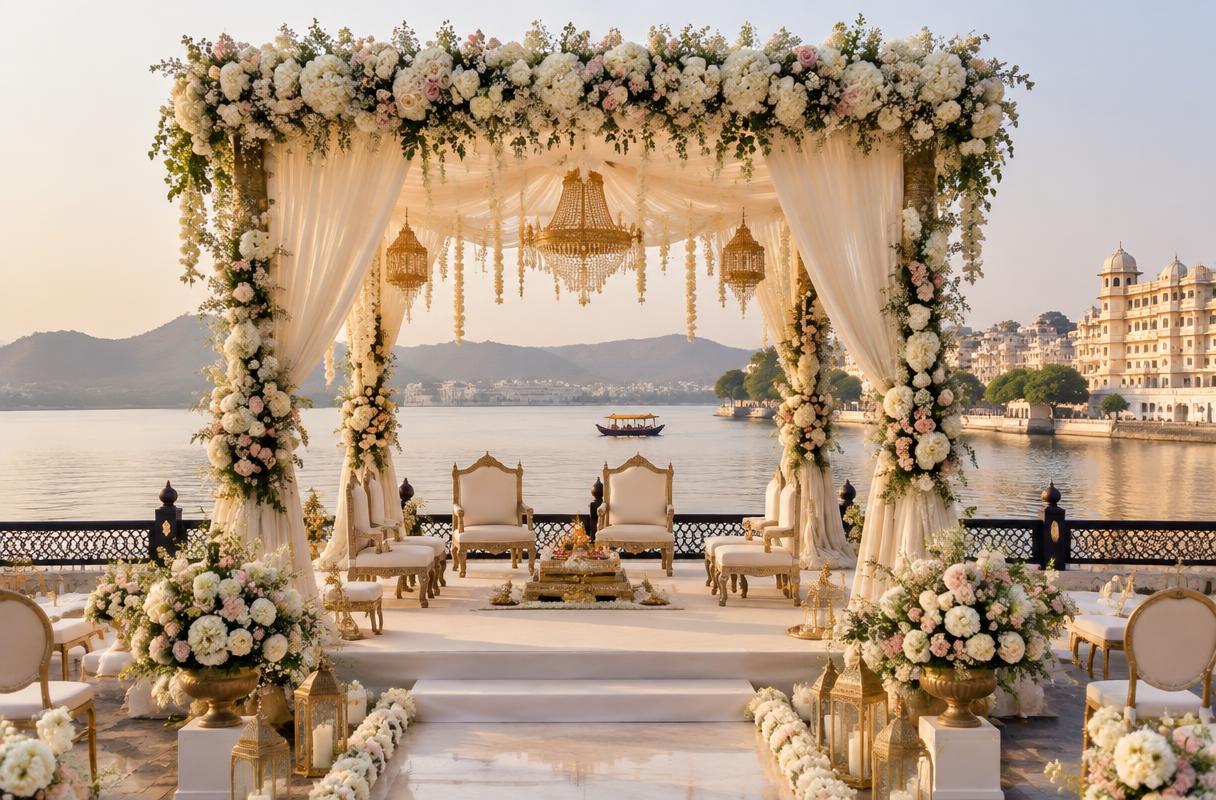
A wedding has no agenda in that sense. It has a sequence of rituals, a guest experience and an emotional arc, and success is whether the family felt looked after and whether the moments landed. The closest thing to a KPI is the absence of visible failure.
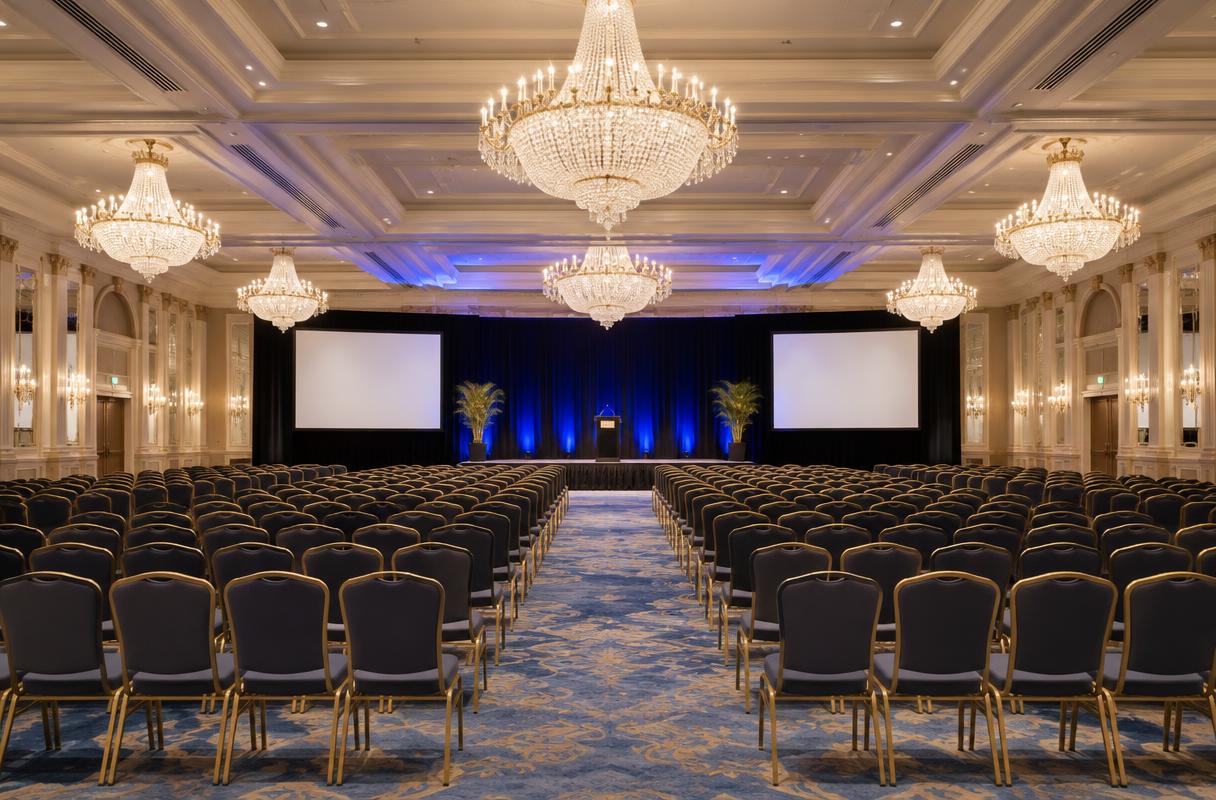
This changes where the money and attention go. On an offsite, the meeting room, the facilitator and the technical setup matter most. On a wedding, decor, food, hospitality and the choreography of each function matter most. Spending a wedding-sized decor budget on an offsite is the classic misallocation, and so is spending wedding attention on a conference room.
Timelines
The lead times are not comparable. Destination weddings in India are commonly planned nine to eighteen months ahead, because the venue, the date and the guest list all have to be settled before anything else moves, and auspicious dates concentrate demand into specific windows.
Corporate offsites commonly run on eight to sixteen weeks, and sometimes less. Budget approvals arrive late, business priorities shift, and the event has to fit the quarter it is meant to serve. A planner moving between the two has to switch from a slow, iterative process with many review points to a compressed one with few.
There is a direct collision between them. Peak wedding weeks in Rajasthan, Goa and Kerala take venue inventory off the market at exactly the time corporate demand peaks. If you are planning a December offsite in Udaipur and finding nothing available at a sane rate, this is why — and moving to midweek or shifting a fortnight often solves it entirely.
Budget behaviour
Corporate budgets are approved in advance, defended against a number, and scrutinised afterwards. An overrun is a problem even when the event was excellent. The planner's job includes protecting the client from their own scope creep, because the client will be asked about the variance later.
Wedding budgets are elastic in a specific way: families will frequently increase spend on things that touch guests directly — food, decor, hospitality, the main function — and resist spending on things that do not, such as planning fees and logistics infrastructure. The overall number often moves upward through the process, and a planner who has not built in checkpoints will have an uncomfortable final reconciliation.
The cost structures differ too. On an offsite, meeting space, production and facilitation are meaningful lines. On a wedding, decor and food dominate, the function count multiplies everything, and guest hospitality over several days is a far larger operation than a two-night corporate programme.
Guest management
Corporate delegates are a cohort. They arrive in waves, travel together, follow a published schedule, and accept being organised. Registration, rooming and transport can be planned as a system, and the system mostly holds.
Wedding guests are individuals with families. They arrive across four days on flights nobody controls, bring children and elderly relatives, have specific dietary and accessibility needs, and will not consult the schedule. Hospitality desks, individual meet-and-greets and per-family coordination are not luxuries here, they are the operating model. The transport plan alone is an order of magnitude more complex.
This is the single biggest operational difference, and it is where corporate planners most often underestimate a wedding. The guest list is not a delegate list. It is several hundred small logistics problems that each want to be treated as the only one.
Risk and contingency
An offsite can absorb a lot. A session can be moved, a dinner relocated indoors, an activity swapped. Delegates are tolerant because they understand constraints and were not emotionally invested in the detail.
A wedding cannot be rescheduled, cannot be moved to the next weekend, and has no tolerance for a visible failure at the central moment. The contingency planning is therefore much heavier: backup power on everything, wet-weather alternatives for every outdoor function, standby vehicles, medical cover on site, and a written escalation plan that someone other than the planner can execute.
Both benefit from the same discipline — rehearse, name an owner for every element, and hold real contingency — but the consequence of skipping it is entirely different.
What each format can learn from the other
Corporate planners should steal the wedding obsession with the guest journey. Weddings plan arrival, welcome, orientation and farewell with a care that corporate programmes rarely match, and delegates notice it immediately when it is present. The small hospitality touches — a thoughtful welcome kit, a named host at the airport, someone who knows your dietary requirement without being asked — cost very little and change how an event feels.
Wedding planners should steal the corporate habit of writing down the objective and measuring afterwards. Even an event designed around emotion benefits from a debrief that asks what worked, what did not and what the next one should change.
We plan both — see destination weddings and corporate offsites — and keep the teams distinct precisely because the disciplines are different, while sharing venue relationships and ground operations across them.
Side by side
| Dimension | Destination wedding | Corporate offsite |
|---|---|---|
| Purpose | Create a memory | Produce an outcome |
| Decision-maker | Family group, consensus-driven | One accountable buyer |
| Typical lead time | 9 to 18 months | 8 to 16 weeks |
| Budget behaviour | Elastic, tends to grow toward guest-facing spend | Fixed and approved, scrutinised afterwards |
| Dominant cost lines | Decor, food, hospitality, multiple functions | Accommodation, meeting space, production, facilitation |
| Guest handling | Individual and family-level hospitality | Cohort logistics and published schedules |
| Duration | Three to five days, multiple functions daily | Two to three days, one working agenda |
| Tolerance for change | Very low at key moments | Reasonably high throughout |
| Success measure | Felt experience and absence of visible failure | Feedback, decisions taken, actions completed |
Planning something like this?
Tell us the brief, get an itemised proposal
Share your dates, group size and destination. You will get a costed, line-by-line proposal from our planning team within 24 hours — with taxes shown separately.
Frequently asked questions
Yes, and many do, because the venue relationships, ground operations and production suppliers overlap heavily. The teams running them should be distinct, though — the decision-making, pacing and guest-handling disciplines are genuinely different.